
If there was one thing my French and Spanish students at school would get rid of, it would be grammatical gender. Or, possibly, me as their teacher, immediately after I’d introduced the concept of grammatical gender to them…
Assigning a grammatical gender to all nouns is alien to them because we don’t do this in English. It’s bad enough, they think, to have to learn new items of vocabulary; but having to learn the gender of those words as well is just too much. They don’t like subsequently having to agree any adjectives they use with those nouns. And they certainly don’t like past participle agreements, especially those linked to preceding direct objects. I mean, who would?
How did grammatical gender originate?
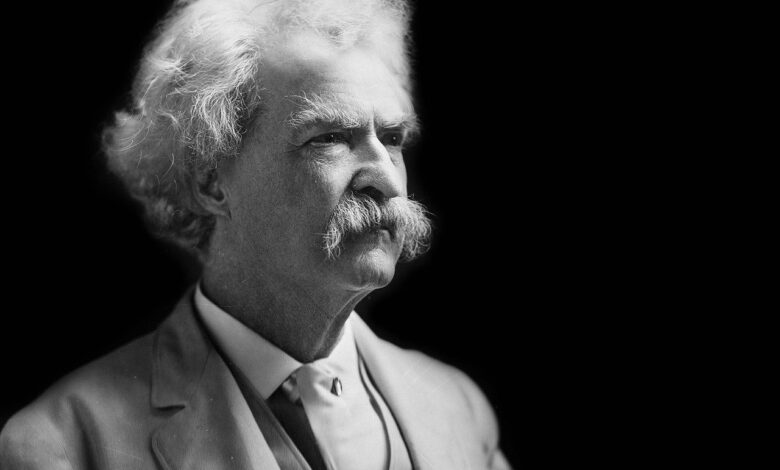
My students are in good company in their dislike of grammatical gender. Back in 1880, Mark Twain, of Tom Sawyer and Huckleberry Finn fame, wrote an article entitled The Awful German Language that was scathing of the whole concept of grammatical gender.
“Every noun has a gender, and there is no sense or system in the distribution. (…) A tree is male, its buds are female, its leaves are neuter; horses are sexless, dogs are male, cats are female – tomcats included, of course. (…) In Germany all the women have either male heads or sexless ones; a person’s nose, lips, shoulders, breast, hands, and toes are of the female sex; and his hair, ears, eyes, chin, legs, knees, heart, and conscience haven’t any sex at all. The inventor of the language probably got what he knew about a conscience from hearsay.”
The rant was written to be amusing, but nonetheless raises a point worth expanding on.
Twain’s use of the words male, female and sex when discussing grammatical gender is reflective of the thinking at that time on the origins of the concept. Linguists thought that grammatical gender came about because primitive man personified all natural objects and, as biological gender was the most obvious categorisation of people, those natural objects were personified in a gender-specific way; that is, in either a male or a female manner.
Not long after Twain was ranting, linguists started to reject this theory, instead believing that words were naturally categorised in languages according to their suffixes. At some point in the process, biologically feminine things tended to end up in one category, and biologically masculine things in another; and it was this that led, over time, to the two categories being labelled as masculine and feminine. In other words, the categories of nouns came first, the masculine / feminine labels came later.
So, does grammatical gender have nothing to do with biological sex?
As well as the grammatical complexities linked to gender in French and Spanish, other things upset my students – especially the younger ones.
The first tends to be the rule that, when discussing a group of people of mixed gender, the masculine plural rather than feminine plural form is used. Yes, little Year 7 girl, even if it’s fifty billion women and one man…
The outrage among the younger girls can be partly offset by pointing out that the word for problem in both French and Spanish (and Italian and German) is masculine, while the words for intelligence and beauty are feminine.
“I bet fart is masculine,” announced one of my Year 7 girls earlier this year. And, for both French and Spanish, she was right. But flatulence is feminine.
While I love a good grammatical debate in class, I try to move beyond these arguments, disassociating grammatical gender and biological sex as far as possible (albeit limited by the fact that mums, aunties and sisters are grammatically feminine, while dads, uncles and brothers are grammatically masculine). I have always tried to frame grammatical gender as just a random categorisation of nouns that may just as well be labelled ‘group A’ and ‘group B’ rather than ‘masculine’ and ‘feminine.’
However, linguists in recent years have done some fascinating research that suggests that, in gendered languages, the grammatical gender of a noun can have an interesting influence on how that noun is perceived.
Lera Boroditsky and Webb Phillips undertook a study where native German and Spanish speakers were given pairs of cards – one with a picture of a male or female person; the other with a picture of an inanimate object or an animal. They were asked to rate the similarity between the two pictures. Both German and Spanish speakers rated the objects or animals as more similar to the person in the other picture if the grammatical gender of the object / animal matched the biological sex of the person.
Talking about another of her studies, Boroditsky reports:
“You ask German and Spanish speakers to describe a bridge, which happens to be grammatically feminine in German, grammatically masculine in Spanish. German speakers are more likely to say bridges are beautiful, elegant, stereotypically feminine words; whereas Spanish speakers will be more likely to say they’re strong or long – masculine words.”
This research suggests, therefore, that – even if the categorisation of inanimate objects as masculine or feminine was basically arbitrary – the labelling of grammatical categories using terminology linked to biological sex does have an impact. In other words, there is a link between grammatical sex and biological gender, even if it’s subconscious.
Is there any grammatical gender in English?
While I view differences between languages as fascinating challenges, my students often think that anything linguistic that’s not done the same as in English is just annoying. Grammatical gender fits into this category, because we don’t use it in English.
At least, not much.
When English needs to indicate noun gender it can do so, for example in the following ways:
- the pronouns that are used to replace the noun (he, she);
- certain suffixes – e.g. -ess in words like waitress, stewardess, actress; also -ine (heroine); -trix (dominatrix, aviatrix) – though the use of these suffixes is beginning to be rejected; in particular the word actress;
- the use of compound nouns (man-servant; he-goat, she-wolf, bull-calf).
Of course, all of these approaches refer to living things that have a biological sex. We do not assign gender to inanimate objects, beyond the tradition of boats being feminine.
It’s interesting, as well, to note that specifying gender is much more common when referring to humans than it is with animals, even though both have a biological sex. If you see a picture of a friend’s new puppy, it’s absolutely fine to say: ‘isn’t it adorable!’ It’s much less acceptable to use the pronoun it when cooing over baby photos, though, apparently…
Would we do it again?
I particularly enjoyed Mark Twain’s criticism of ‘the inventor of the language’ during his rant about German. My students’ outrage at difficult linguistic concepts often feels like it’s directed at me personally, as if I were the ‘inventor’ of French and Spanish (I mean, I know I have a receding hairline, but how old do they think I am?)
While the idea that one person ‘invented’ these languages is a nonsense, more recently-invented languages do have more clearly defined ‘inventors.’ So, have they taken on board language-learners’ struggles with grammatical gender, and rejected it as a concept with no usefulness?
Well, the only two modern creations that I know of, language-wise, are Esperanto and Klingon, and both decided not to adopt a system of grammatical gender for nouns.
If the aim of these new languages was that lots of people should want to try and learn them, I would agree that this was probably a sensible decision!


Fascinating read! Thanks for sharing 🙂